

Our History
After 10 years of negotiations, on April 1, 2011, Huu-ay-aht First Nations became a self-governing Modern Treaty Nation under the Maa-nulth Treaty Final Agreement. Four other nations signed alongside us: Ka:’yu:’k’t’h’/Che’tles7et’h’, Toquaht, Uchucklesaht, and Yuułuʔiłʔatḥ. Together, these five nations formed the first Modern Treaty Final Agreement in BC and the first Modern Treaty on Vancouver Island.
Self-Governance
What the Treaty Means for Huu-ay-aht
Beyond the Indian Act
As a Modern Treaty Nation, Huu-ay-aht First Nations no longer falls under the Indian Act. We govern our lands under our own laws, which allows us to be self-governing and self-reliant.
A Framework for Relationships
The Treaty outlines how the Maa-nulth First Nations, Canada, and British Columbia will live and work together. It sets a framework for government-to-government relationships so all parties can address issues together as they arise. It also provides for democratically elected Maa-nulth governments with the authority to enact laws, manage lands and resources, protect and enhance culture, deliver programs and services, and levy taxes.
Benefits of the Treaty
For Huu-ay-aht, the Treaty brings:
- Self-Governing: decision making and law-making authority
- Access to ḥaḥuułi: Land use, zoning, and resources
- Economic Development: Meaningful Opportunities for growth
- Programs: access to opportunities that support education, community services, social services, culture and language, communications, infrastructure, traditional foods, housing, child and family wellness
Maa-nulth Treaty Videos
Maa-nulth Treaty 10-Year Anniversary
Maa-nulth 2025: Aligning Our Reconciliation Pathways
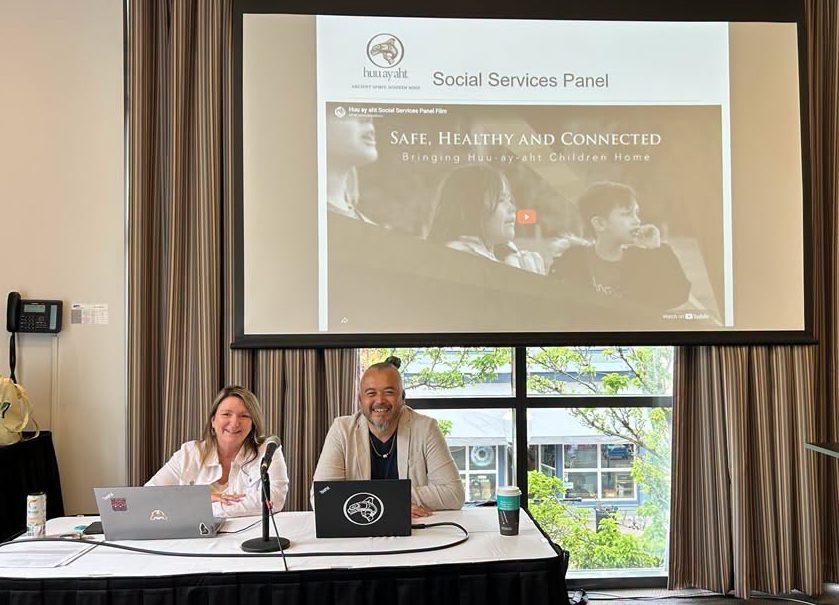
Nearly 14 years after the Maa-nulth Treaty date, this video highlights the economic developments, social services achievements, and Government to Government relations for Toquaht, Uchucklesaht, Yuułuʔiłʔatḥ, Huu-ay-aht, and Ka:’yu:’k’t’h’/Che:k’tles7et’h
Explore Government
News and updates